
Cast Iron Skillet Cinnamon Roll
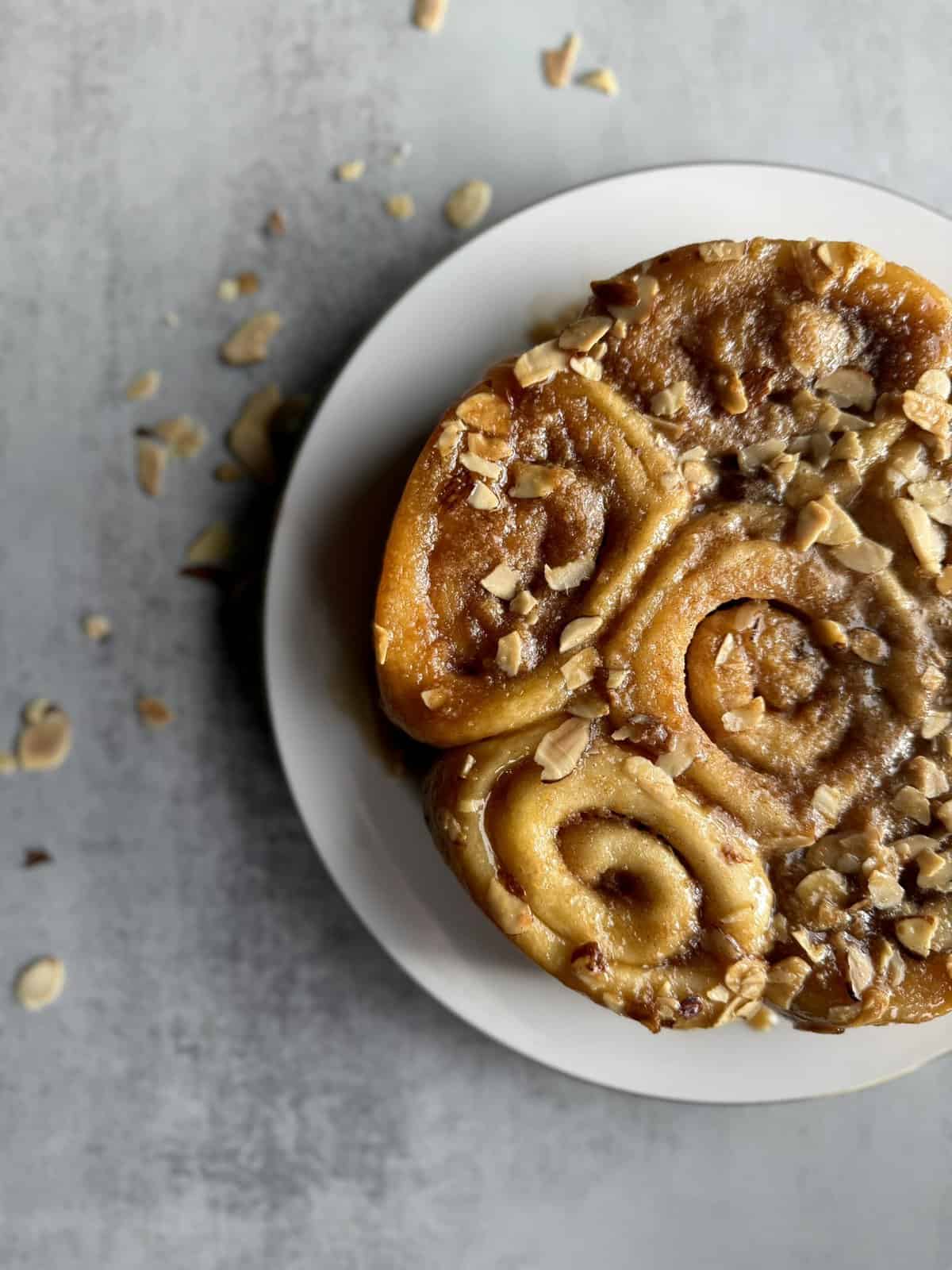
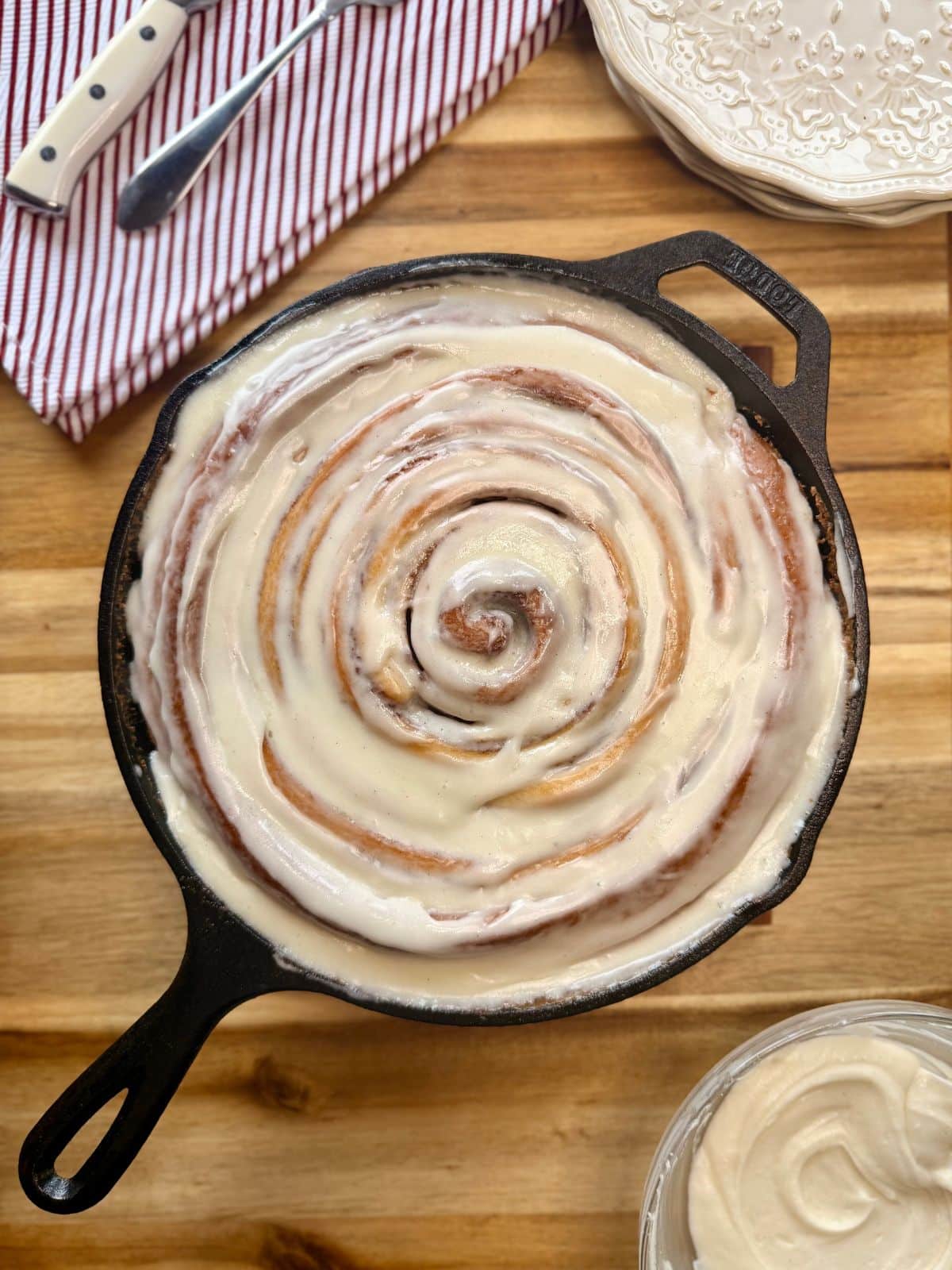
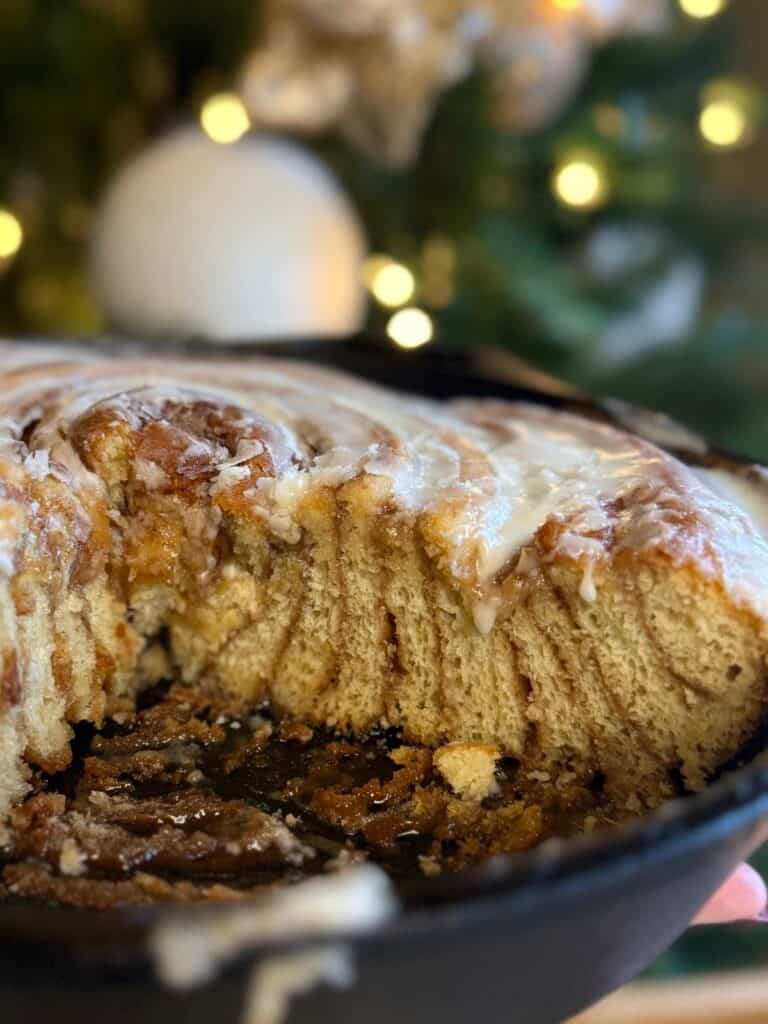
This oversized Cast Iron Skillet Cinnamon Roll is everything you love about the classic—pillowy, buttery dough, a gooey cinnamon-sugar swirl, and a caramel layer that cooks right in the skillet, keeping the roll soft and tender. Top it with vanilla icing that melts into all those layers, and you’ve got a show-stopping, tear-and-share breakfast perfect for Christmas morning! Honestly, this is the best (and biggest) cinnamon roll you’ll ever have—perfect for sharing (or keeping all to yourself!).
Why I’m Obsessed with This Cinnamon Roll
It’s a Showstopper. Put this giant skillet cinnamon roll on the table Christmas morning and people will lose it. Is it a little over the top? Absolutely. But it’s the kind of bake that looks impressive and tastes even better.
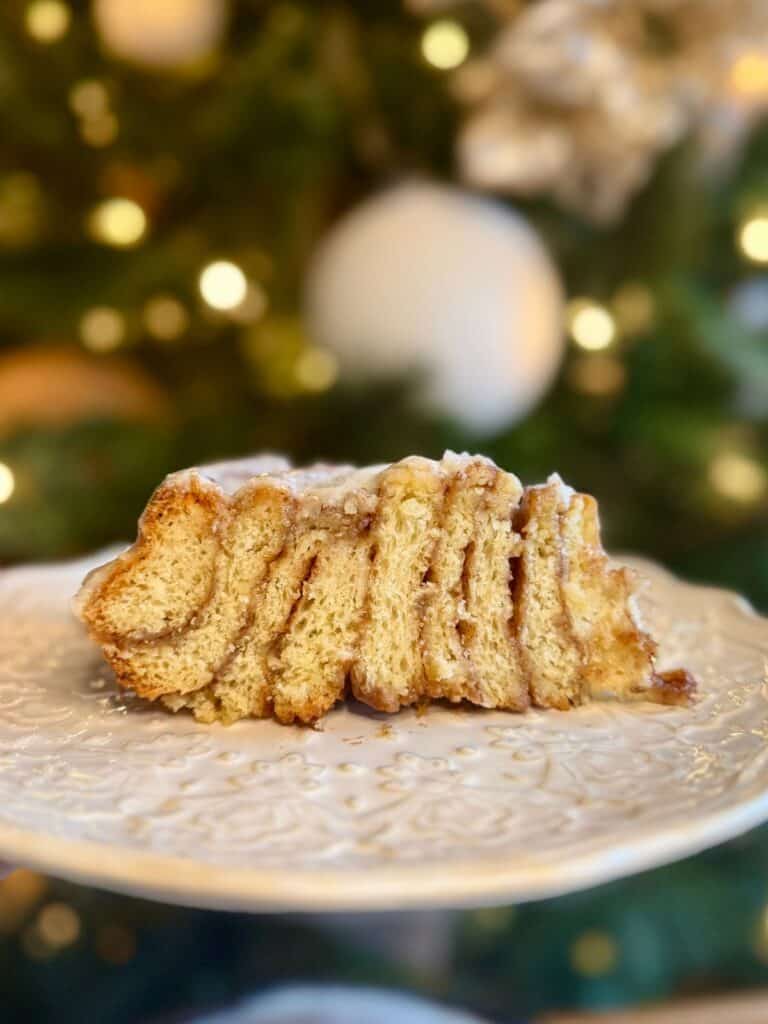
Soft & Fluffy. This brioche-style dough makes the cinnamon roll incredibly soft and buttery, while still staying light and pillowy. Perfect for pulling apart and every bite just melts in your mouth.
The Skillet Caramel. As if it wasn’t indulgent enough, the caramel base melts into the dough as it bakes, keeping it extra moist. Paired with the gooey cinnamon filling and the melty vanilla icing, it is truly perfection.
Make-ahead friendly. Prep it the night before, let is rise in the fridge overnight, pop it in the oven the next morning, and you’ve got an effortless, over-the-top breakfast with zero stress.
Ingredient Highlights
The Dough
- Milk: Makes the dough soft, tender, and adds richness.
- Active Dry Yeast: Gives you that tall, fluffy rise.
- Butter: The key to a brioche-style dough that’s soft, buttery, and melt-in-your-mouth.
- Egg: Adds structure and a plush, pillowy texture.
The Filling
- Brown Sugar: Caramelly sweetness that melts into the spirals.
- Cinnamon: The star of the show! Brings that warm, signature flavor.
- Honey: Adds moisture and helps the filling stay extra gooey.
- Butter: Helps everything melt together into a luscious swirl.
The Skillet Caramel
- Butter + Brown Sugar: The base of that sticky, gooey bottom layer.
- Heavy Cream: Makes the caramel extra silky and keeps the roll incredibly moist as it bakes.
The Vanilla Icing
- Butter: Adds body and richness so the icing melts beautifully over the warm roll.
- Powdered Sugar: The sweetness to top off the cinnamon roll.
- Heavy Cream: Makes the icing smooth and velvety.
- Vanilla: Adds warmth and rounds out the sweetness.
Step-by-Step Instructions
1. Activate the yeast.
Warm the milk to about 110°F (either in a saucepan or in the microwave in 20-second intervals). Add the 1 tablespoon of sugar and the active dry yeast, then stir. Let it sit for 5–10 minutes, until foamy.
2. Mix the dough.
In the bowl of a stand mixer, combine the activated yeast mixture, egg, ¼ cup sugar, 3 cups of flour (we will add the remaining 1/4 later with the butter), and salt. Using the dough hook, mix on medium-low speed for 8–10 minutes.
3. Add the butter.
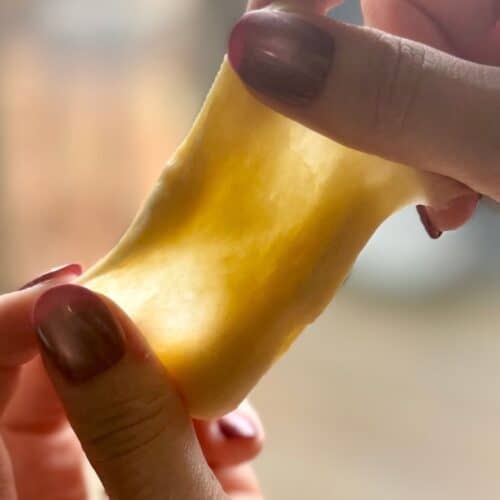
With the mixer running on low, add the softened butter 1 tablespoon at a time until fully incorporated. Add the remaining ¼ cup of flour and continue kneading for another 8–10 minutes. The dough should be smooth, slightly tacky, and able to pass the windowpane test. Transfer to a lightly greased bowl and cover.
4. Proof.
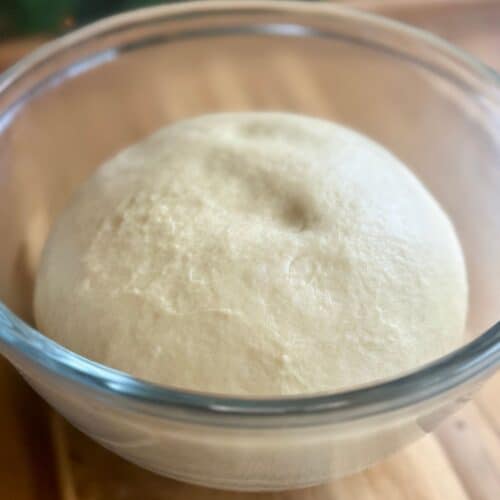
Let the dough rise in a warm spot until almost doubled in size, about 1–1 ½ hours.
5. Make the skillet caramel.
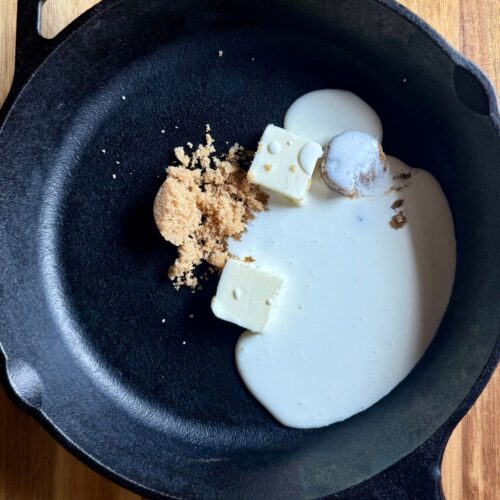
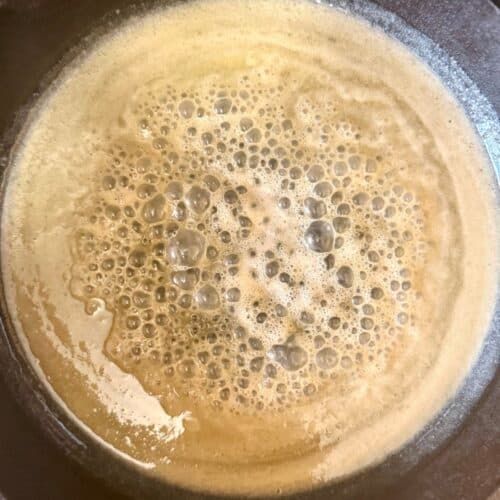
As soon as the dough begins proofing, prepare the caramel base. In a 10-inch cast-iron skillet, combine the butter, brown sugar, and heavy cream. Cook over medium heat, stirring occasionally until melted and beginning to simmer. Let it simmer undisturbed for 1 minute, then remove from heat. Allow the caramel to cool completely in the skillet. (It must be fully cooled before assembling the cinnamon roll—warm caramel will cause the dough to overproof during the final rise.)
6. Make the filling.
In a small bowl, mix together the softened butter, brown sugar, cinnamon, honey, and salt.
7. Roll out the dough.
Once the dough has nearly doubled, punch it down and turn it out onto a lightly floured surface. Roll into a 12 × 15-inch rectangle.
8. Add the filling.
Spread the filling evenly over the entire surface of the dough.
9. Cut and assemble.
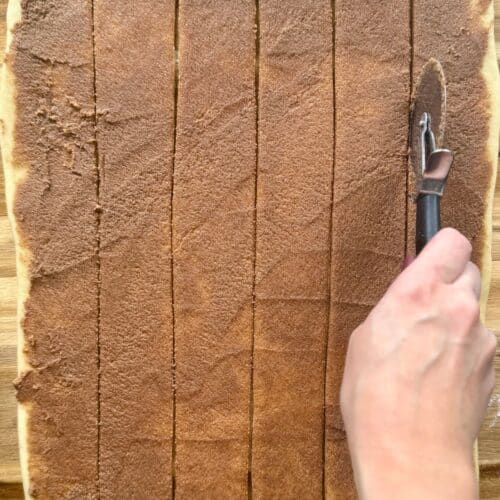
Using a pizza cutter, cut the dough horizontally into 6 long strips (about 2 inches wide).
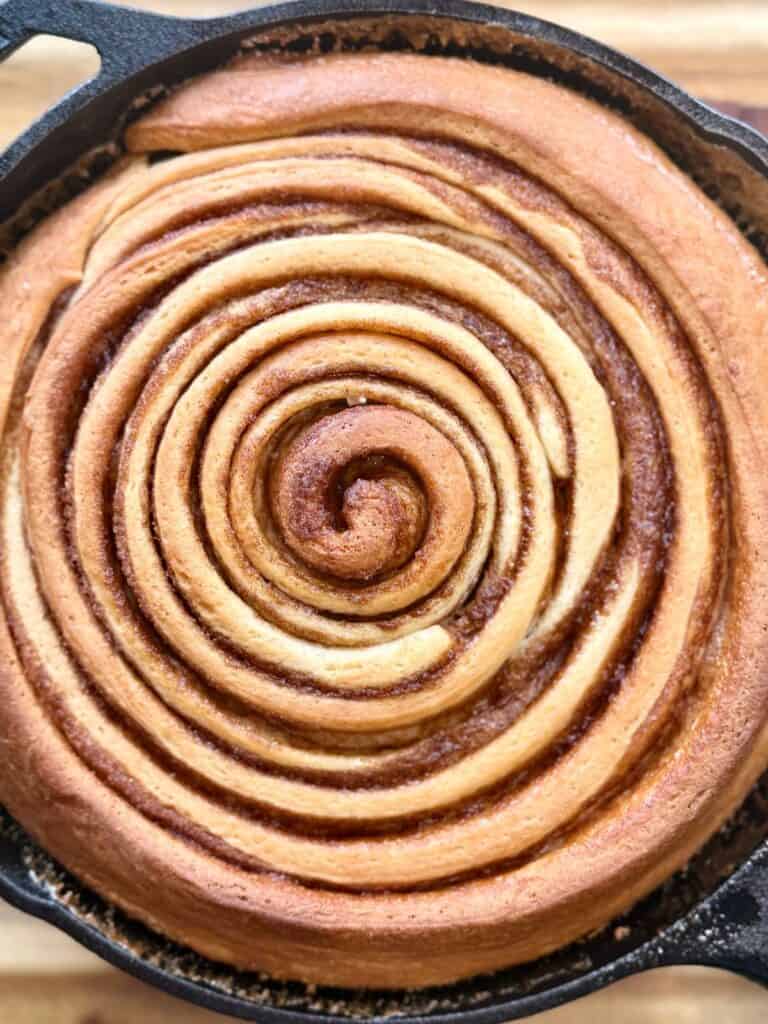
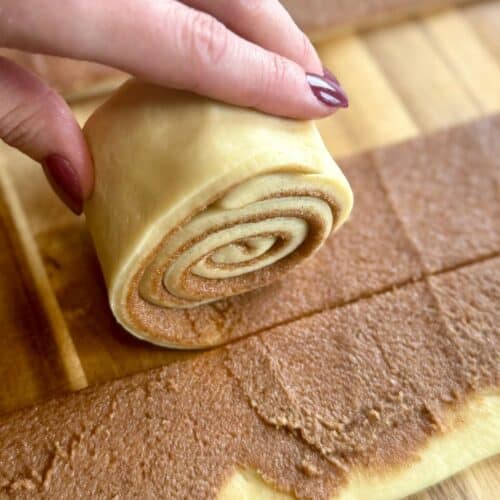
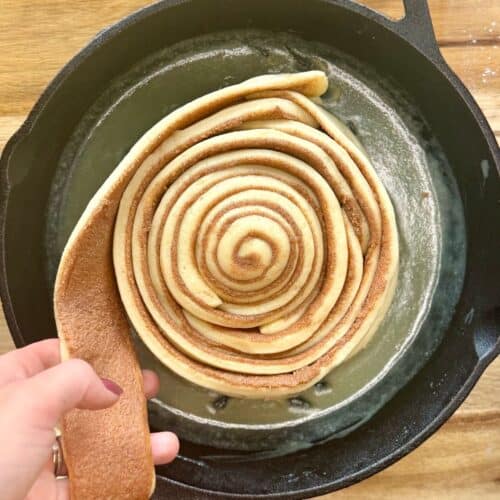
Starting with one strip, roll it up. Place that roll at the end of the next strip and continue rolling. Repeat one more time, then transfer the partially formed roll into the skillet. Wrap the remaining strips around it, slightly overlapping the end of each strip with the beginning of the next.
10. Final proof.
Cover the skillet with plastic wrap or a tea towel and let the cinnamon roll proof in a warm spot until puffy and slow to spring back when gently pressed, about 1 hour.
Overnight option: Cover and refrigerate overnight. In the morning, let it sit at room temperature until the dough springs back slowly, about 1 ½-2 hours, depending on kitchen temperature.
11. Preheat and bake.
When the roll has been proofing for about 30 minutes, preheat the oven to 350°F.
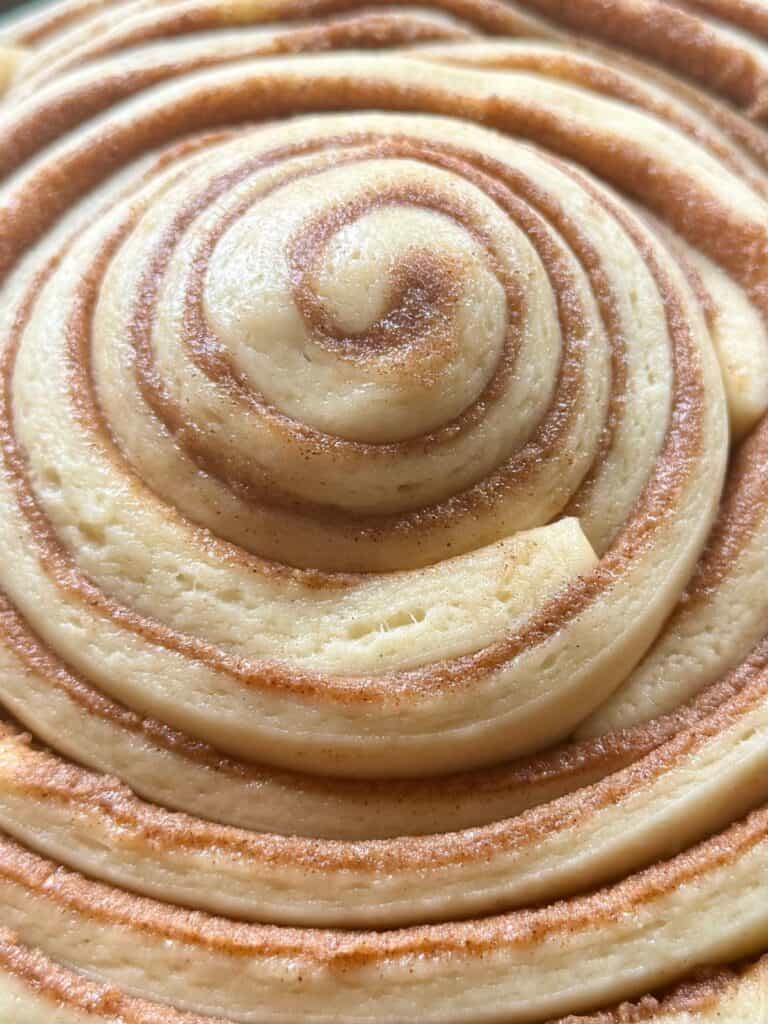
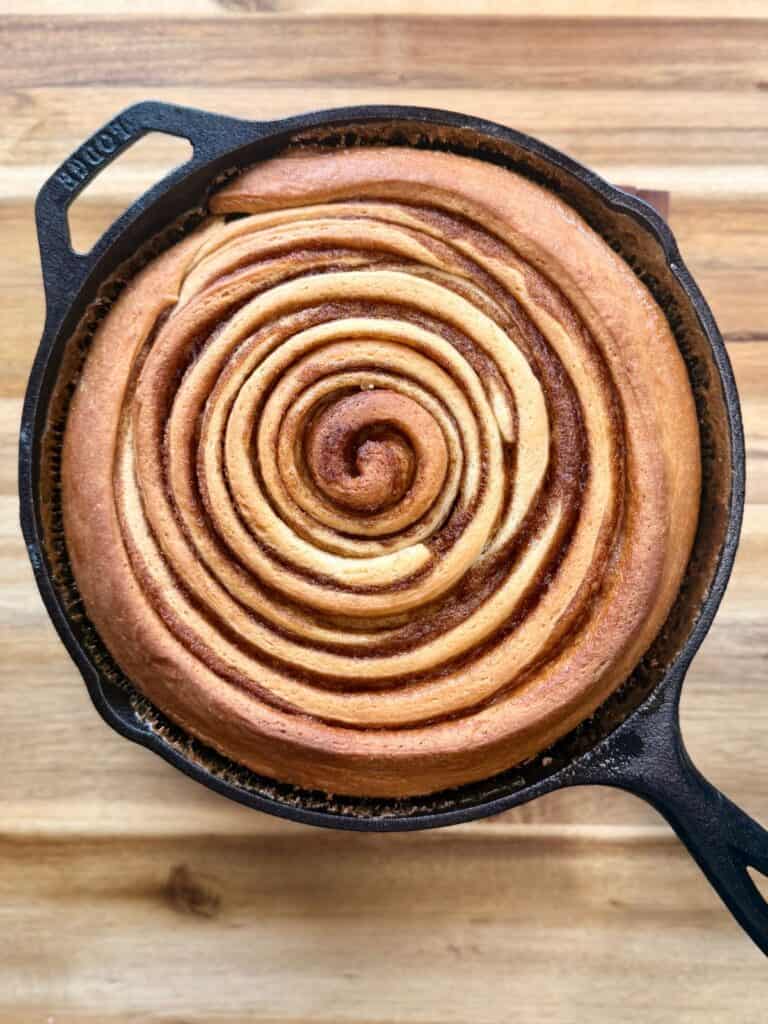
When the dough is ready and fully proofed, place the skillet on a baking sheet (to catch any caramel drips) and bake for 30–35 minutes, until the center registers about 190°F on a thermometer or a toothpick comes out clean. Check around the 20-minute mark; if it’s browning too quickly, loosely tent with foil.
12. Make the icing.
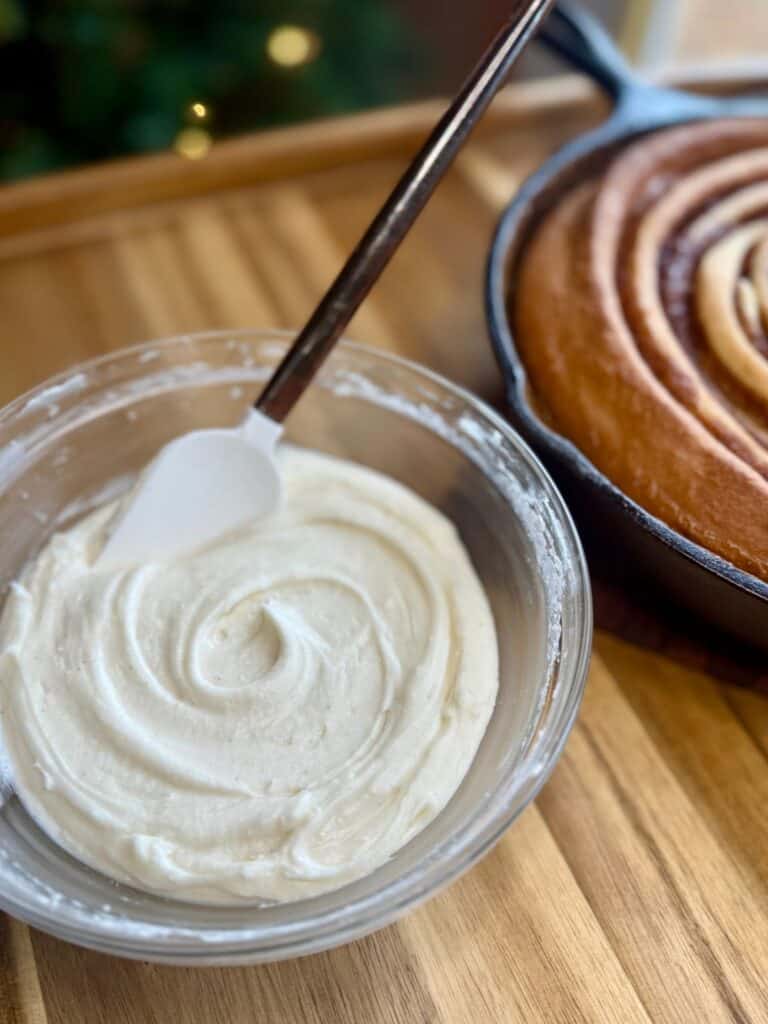
In a small bowl, whisk together the softened butter, heavy cream, powdered sugar, salt, and vanilla until smooth.
13. Ice and enjoy!
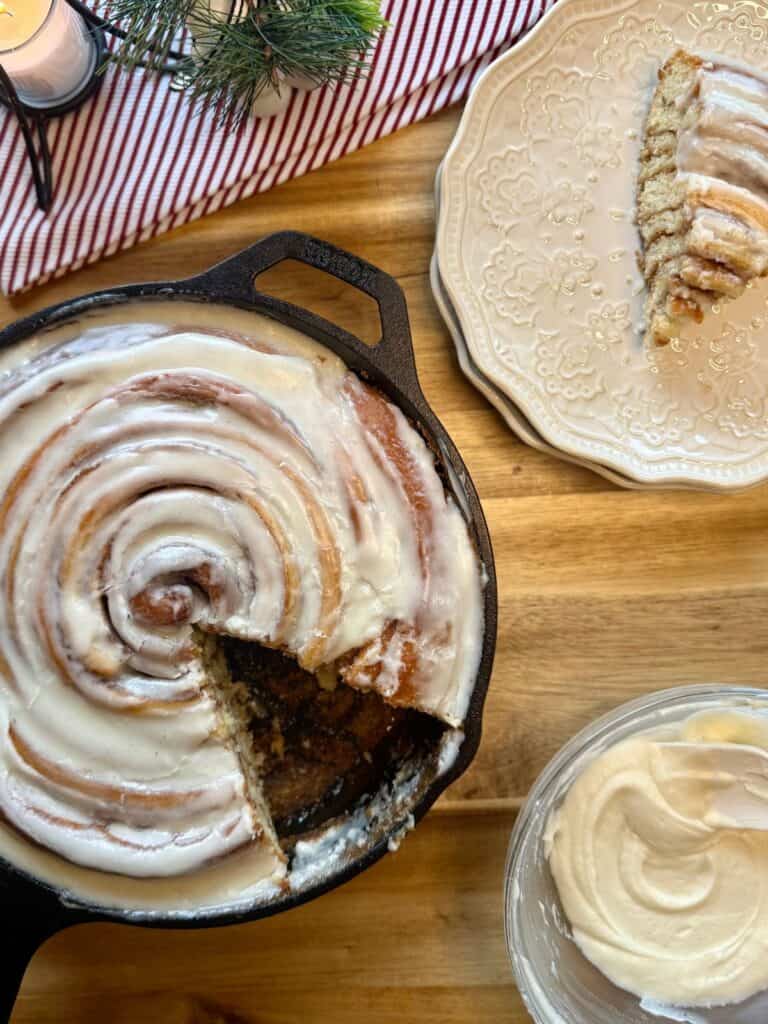
Let the cinnamon roll cool for 5–10 minutes, then spread the icing over the top. Slice and serve—or pull apart straight from the skillet!
Blue Mountain Baker’s Tips
Use a kitchen scale: For the softest, fluffiest dough, accuracy matters. Measuring flour with cups can easily lead to too much or too little, which will affect the texture of your cinnamon roll. A scale will give you consistent results every time—and scaling ingredients right into one bowl means fewer dishes!
Activate the yeast: Giving the yeast 5–10 minutes to get foamy and bubbly in warm milk lets you know it’s alive and ready to help your dough rise. The bit of sugar in the milk gives the yeast something to feed on and wakes it up faster.
Just be sure the milk isn’t too hot—temperatures above 110 -115°F can kill yeast. A kitchen thermometer is super helpful here. Warm the milk slowly in a saucepan or in the microwave in short 20-second intervals. If it gets too hot, simply let it cool down before adding the yeast.
The windowpane test: What’s the windowpane test? After kneading, gently stretch a small piece of dough between your fingers. If it stretches thin enough to let light pass through without tearing—like a tiny “window”—you’re good to go. This means the gluten is developed, and your dough will rise beautifully. For enriched doughs like this one (doughs with extra fat), gluten takes a little longer to form. That’s why we let the dough mix for a while before adding the butter—it gives the gluten a head start.
Baking the cinnamon roll: Since this is one giant cinnamon roll, the center takes a bit longer to bake. Use a thermometer and bake until the middle reaches at least 190°F to avoid a doughy center. If you don’t have a thermometer, use a toothpick—insert it into the center, and it should come out clean with no dough on it. If the top starts browning too quickly, tent the skillet loosely with foil during the last part of baking. And don’t forget to place a sheet pan under the skillet—bubbling caramel is delicious… just not on the bottom of your oven!
Cast Iron Skillet Cinnamon Roll FAQ
Yes! Assemble the cinnamon roll in the skillet, cover, and refrigerate overnight. In the morning, let it come to room temperature until the dough looks puffy and springs back slowly—1 ½ – 2 hours. You can also make the icing ahead and refrigerate it. Bake, top with icing, and enjoy a lovely breakfast!
Because this is one giant cinnamon roll, the center takes longer to cook than a standard pan of smaller rolls. The most reliable way is to use an instant-read thermometer and check that the middle reaches 190°F. If you don’t have a thermometer, use a toothpick—it should come out clean with no raw dough. If the top browns too quickly before the center is done, tent the skillet loosely with foil.
Absolutely. Instant yeast works great here and can be mixed directly into the dry ingredients—no need to activate it in warm milk first. Use whatever you have on hand; both will give you a tall, fluffy cinnamon roll!
Nope! A cast-iron skillet gives you a beautifully caramelized bottom and even heat, but any 9–10-inch cake pan will work. For the caramel base, cook it in a saucepan first, then pour it into the cake pan and let it cool completely before assembling the cinnamon roll.
If Somehow You Have Leftovers…
Room Temperature:
The cinnamon roll keeps well at room temperature for 2–3 days. Store it tightly covered or in an airtight container to keep it soft and prevent it from drying out.
Refrigerator:
If you want it to last a little longer, you can store leftovers in the fridge for up to 5 days. Warm slices in the microwave for 10–15 seconds, or in a 350°F oven until warmed through.
I hope this Cast Iron Skillet Cinnamon Roll finds its way to your holiday table—or even just a cozy weekend morning. If you give it a try, leave a comment or share a photo with me on Instagram—I love seeing what you bake!
Happy baking, friends!
XO, Blue Mountain Baker 💙
Recipe Card
Cast Iron Skillet Cinnamon Roll
Equipment
- Stand mixer with dough hook
- Mixing bowls
- 10-inch cast-iron skillet
- Whisk
- Rubber spatula or wooden spoon
- Rolling Pin
- Measuring cups and spoons
- Kitchen scale (optional but recommended)
- Instant-read thermometer (optional but recommended)
- Pizza cutter or sharp knife
- Plastic wrap
- Baking sheet and parchment paper
Ingredients
Dough:
- ¾ cup milk (194g)
- 2 ¼ teaspoons active dry yeast 1 packet
- ¼ cup + 1 tablespoon granulated sugar (50g)
- 3 ¼ cups all-purpose flour divided (400g)
- 2 teaspoons salt
- 1 egg
- 6 tablespoons unsalted butter room temperature (90g)
Filling:
- 4 tablespoons unsalted butter room temperature (56g)
- ½ cup brown sugar, packed (110g)
- 1 tablespoon cinnamon
- 1 tablespoon honey
- ¼ teaspoon salt
Skillet Caramel:
- 2 tablespoons unsalted butter (28g)
- 2 tablespoons brown sugar (30g)
- 2 tablespoons heavy cream (30g)
Vanilla Icing:
- 4 tablespoons unsalted butter room temperature (56g)
- 4 tablespoons heavy cream (60g)
- 2 cups powdered sugar (210g)
- Pinch salt
- 1 tablespoon vanilla extract
Instructions
- Activate the yeast. Warm the milk to about 110°F. Add the 1 tablespoon of sugar and the active dry yeast, then stir. Let sit for 5–10 minutes, until foamy.
- Mix the dough. In the bowl of a stand mixer, combine the activated yeast mixture, egg, ¼ cup sugar, 3 cups of flour, and salt. Using the dough hook, mix on medium-low speed for 8–10 minutes.
- Add the butter. With the mixer running on low, add the softened butter 1 tablespoon at a time until fully incorporated. Add the remaining ¼ cup of flour and continue kneading for another 8–10 minutes. The dough should be smooth, slightly tacky. Transfer to a lightly greased bowl and cover.
- Proof. Let the dough rise in a warm spot until almost doubled in size, about 1–1 ½ hours.
- Make the skillet caramel. As soon as the dough begins proofing, prepare the caramel base. In a 10-inch cast-iron skillet, combine the butter, brown sugar, and heavy cream. Cook over medium heat, stirring occasionally until melted and beginning to simmer. Let it simmer undisturbed for 1 minute, then remove from heat. Allow the caramel to cool completely in the skillet. (It must be fully cooled before assembling the cinnamon roll—warm caramel will cause the dough to overproof during the final rise.)
- Make the filling. In a small bowl, mix together the softened butter, brown sugar, cinnamon, honey, and salt.
- Roll out the dough. Once the dough has nearly doubled, punch it down and turn it out onto a lightly floured surface. Roll into a 12 × 15-inch rectangle.
- Add the filling. Spread the filling evenly over the entire surface of the dough.
- Cut and assemble. Using a pizza cutter, cut the dough horizontally into 6 long strips (about 2 inches wide).Starting with one strip, roll it up. Place that roll at the end of the next strip and continue rolling. Repeat one more time, then transfer the partially formed roll into the skillet. Wrap the remaining strips around it, slightly overlapping the end of each strip with the beginning of the next.
- Final proof. Cover the skillet with plastic wrap or a tea towel and let the cinnamon roll proof in a warm spot until puffy and slow to spring back when gently pressed, about 1 hour.Overnight option: Cover and refrigerate overnight. In the morning, let it sit at room temperature until the dough springs back slowly, about 1 ½–2 hours (depending on kitchen temperature).
- Preheat and bake. When the roll has been proofing for about 30 minutes, preheat the oven to 350°F.When the dough is ready and fully proofed, place the skillet on a baking sheet (to catch any caramel drips) and bake for 30–35 minutes, until the center registers about 190°F on a thermometer. Check around the 20-minute mark; if it’s browning too quickly, loosely tent with foil.
- Make the icing. In a small bowl, whisk together the softened butter, heavy cream, powdered sugar, salt, and vanilla until smooth.
- Ice and enjoy! Let the cinnamon roll cool for about 5 minutes, then spread the icing over the top. Slice and serve—or pull apart straight from the skillet!
Notes
- Instant yeast can be used in place of active dry yeast.
- Check dough readiness with the windowpane test: gently stretch a small piece of dough. If it tears easily, keep mixing. If it stretches thin enough for light to shine through, it’s ready to proof.
- If you don’t have a cast iron skillet, a 9–10 inch cake pan works. Cook the caramel separately and pour it into the lightly greased pan to cool completely before assembling the cinnamon roll.
- Storage: Keep leftover cinnamon roll tightly covered at room temperature for up to 3 days, or refrigerate for up to 5 days. Rewarm slices in the microwave for 10–15 seconds, or in a 350°F oven until heated through.